Last Updated: January 28, 2026.
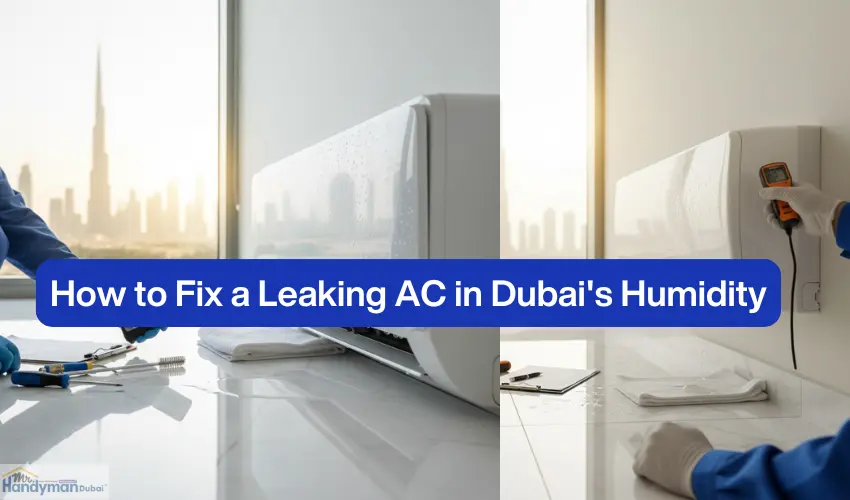
Living in Dubai means battling extreme heat and surprisingly high humidity levels, especially during summer months. Your air conditioning system works overtime in this challenging desert climate, making AC leaks one of the most common HVAC problems homeowners and businesses face.
If you’ve noticed water pooling around your cooling system, don’t panic. This comprehensive guide, compiled with insights from certified HVAC technicians specializing in Middle East climate conditions, will walk you through identifying and fixing the issue.
Understanding Why AC Units Leak in Dubai’s Climate
Before diving into the repair process, it’s essential to understand why leaking occurs more frequently in Dubai compared to other regions. The combination of scorching outdoor temperatures and high indoor cooling demands creates excessive condensation within your AC system.
When humidity levels spike during certain months, your air conditioner works harder to remove moisture from the air, which can overwhelm drainage systems if not properly maintained.
Common causes of AC water leakage in Dubai include:
- Clogged condensate drain lines from dust and sand particles
- Frozen evaporator coils due to restricted airflow
- Improper installation not accounting for humidity levels
- Damaged or rusted drain pans from constant moisture exposure
- Low refrigerant levels affecting the cooling cycle
- Dirty air filters restricting proper ventilation
Safety First: What You Need Before Starting
As any certified technician will tell you, safety is paramount when working with HVAC systems. Before attempting any troubleshooting or repair work, gather the following tools and take necessary precautions:
Essential Tools and Materials for AC Repair:
- Wet/dry vacuum cleaner
- Distilled white vinegar or specialized AC cleaner
- Screwdrivers (Phillips and flathead)
- Flashlight or headlamp
- Towels and bucket for water collection
- Replacement air filters
- Pipe brushes for drain line cleaning
- Protective gloves and safety glasses
Safety Precautions:
- Turn off your AC unit completely at the thermostat
- Switch off the circuit breaker to the AC system
- Allow the unit to rest for 15-20 minutes before inspection
- Never touch electrical components with wet hands
- If you’re uncomfortable with any step, contact a professional HVAC service
Step-by-Step Guide to Fix Your Leaking AC
Step 1: Identify the Source of the Leak
Begin your troubleshooting by locating exactly where the water is coming from. In Dubai’s high-humidity environment, condensation is normal, but excessive water indicates a problem.
Inspection checklist:
- Check around the indoor unit for visible water pools
- Examine the condensate drain line exit point outside
- Look for ice formation on refrigerant lines
- Inspect the drain pan under the evaporator coil
- Check if water is coming from the air handler cabinet
Take photos of any damage you discover—this documentation helps if you need to call a certified technician later.
Step 2: Clear the Condensate Drain Line
The most common cause of AC leaks in Dubai is a clogged drain line. Dust, sand particles carried by desert winds, and algae growth in humid conditions create blockages that prevent proper drainage.
Cleaning procedure:
First, locate your condensate drain line. It’s typically a PVC pipe extending from your indoor unit to the outside of your building. You’ll usually find a T-shaped vent with a cap on the drain line.
Remove the cap from the drain line and use a wet/dry vacuum to suction out any blockage. Place the vacuum hose over the drain line opening and run it for 2-3 minutes. You should hear or feel the suction pulling through the obstruction.
Next, flush the line with a cleaning solution. Mix equal parts distilled white vinegar and water, then slowly pour about one cup of this solution into the drain line. Let it sit for 30 minutes to dissolve any remaining buildup. The acidic nature of vinegar breaks down algae and mineral deposits without damaging your HVAC system.
Flush the line with clean water and check that it drains freely. In Dubai’s dusty environment, certified technicians recommend cleaning your condensate drain every 3-4 months to prevent recurring issues.
Step 3: Replace or Clean Your Air Filters
Dirty air filters are a leading cause of cooling system problems in desert climates. When filters become caked with dust and sand particles, airflow restriction causes the evaporator coil to freeze, leading to water damage when it melts.
Filter maintenance process:
Locate your air filter—it’s usually behind a return air grille on a wall or ceiling, or inside the air handler unit itself. Remove the filter carefully and inspect it under good lighting.
If you have disposable filters, replace them immediately if they appear gray or clogged. For reusable filters, take them outside and gently vacuum both sides. Wash them with warm water and mild detergent, rinse thoroughly, and allow them to dry completely before reinstalling.
For Dubai homes and businesses, HVAC professionals recommend checking filters every two weeks and replacing or cleaning them monthly during peak summer months when your AC runs continuously.
Step 4: Inspect and Clean the Drain Pan
The drain pan sits beneath your evaporator coil and catches condensation before it flows into the drain line. Over time, constant moisture exposure in humid conditions can cause rust, cracks, or overflow situations.
Drain pan inspection and cleaning:
Access your drain pan by removing the access panel on your indoor unit (refer to your manufacturer’s manual for specific instructions). Use your flashlight to examine the pan thoroughly for rust spots, holes, or cracks.
If the pan is damaged, it will need replacement—this is a job best left to a certified technician as it requires disconnecting refrigerant lines. However, if the pan is intact but dirty, you can clean it yourself.
Use towels to absorb standing water, then wipe the pan clean with a cloth dampened with vinegar solution. This prevents algae growth that thrives in Dubai’s humid environment.
Pour a small amount of bleach solution (1 part bleach to 10 parts water) into the pan to discourage future biological growth, ensuring proper drainage afterward.
Step 5: Check for Frozen Evaporator Coils
If you notice ice formation on your refrigerant lines or evaporator coil, this indicates a serious airflow or refrigerant problem that causes excessive condensation when the ice melts.
Addressing frozen coils:
Turn off your AC system completely and allow the ice to melt naturally—this typically takes 2-4 hours depending on the amount of ice buildup. Place towels or a bucket beneath the unit to catch melting water.
Once thawed, check your air filter (as dirty filters are the primary cause). If the filter is clean and freezing reoccurs, you likely have one of these issues:
- Low refrigerant levels requiring professional recharging
- Blocked return air vents restricting airflow
- Faulty blower fan not circulating air properly
- Refrigerant leak in the cooling system
These problems require specialized equipment and certification to repair safely. Contact a licensed HVAC technician who understands Dubai’s specific climate challenges.
Step 6: Verify Proper Refrigerant Levels
While checking refrigerant requires professional certification and equipment, you can look for signs of low refrigerant that contribute to water leakage:
Low refrigerant symptoms:
- Ice formation on refrigerant lines
- AC blowing warm air despite running continuously
- Hissing or bubbling sounds from the unit
- Higher electricity bills without increased usage
- Longer cooling cycles than normal
If you notice these signs, schedule service with a certified HVAC technician immediately. In Dubai’s extreme temperatures, running an AC with low refrigerant damages the compressor—a repair costing thousands of dirhams.
Step 7: Ensure Proper Installation and Slope
Improper installation is particularly problematic in Dubai, where some contractors lack experience with the region’s unique humidity challenges. Your AC unit and drain line must have correct slope for gravity-assisted drainage.
Installation verification:
Check that your indoor unit is level or slightly tilted toward the drain side (consult your manual for specifications). Use a simple bubble level to verify this.
Examine the condensate drain line—it should slope downward continuously from the unit to the exterior discharge point. Any dips or level sections create water traps where debris accumulates and blockages form.
If installation issues exist, you’ll need a qualified technician to reposition the unit or reconfigure drain lines. Don’t attempt to move or tilt a mounted AC unit yourself, as this can damage refrigerant lines and electrical connections.
Just like AC leaks, a malfunctioning water heater can cause significant water damage and high DEWA bills during the Dubai winter. Learn how to identify and fix heater issues in our latest Water Heater Troubleshooting & Repair Guide.
Step 8: Inspect the Condensate Pump (If Applicable)
Some AC installations in multi-story buildings or basement locations use condensate pumps to move water upward to drainage points. These pumps can fail in Dubai’s dusty environment.
Pump troubleshooting:
Locate your condensate pump—it’s a small box connected to the drain line with electrical power. Listen for the pump activating when your AC runs (you should hear a motor sound).
Check the pump reservoir for excessive water (indicating pump failure) or debris clogging the float switch. Clean the reservoir with vinegar solution and test the float mechanism by lifting it manually—the pump should activate.
If the pump doesn’t run when the float is raised, or if it runs but doesn’t discharge water, the pump has failed and needs replacement. This is a straightforward job for a technician but requires proper pump sizing for your system’s condensation output.
Step 9: Address External Factors
Dubai’s environment creates unique challenges that contribute to AC problems. Sand storms, construction dust, and coastal salt air affect HVAC performance.
Environmental considerations:
Inspect the exterior drain line discharge point to ensure it’s clear of debris, sand accumulation, or insect nests (particularly common in the UAE). Verify water flows freely when your system runs.
Check outdoor unit surroundings—the condenser needs adequate clearance for airflow. Sand dunes forming around the unit, vegetation growing too close, or stored items blocking airflow all reduce cooling efficiency and increase condensation issues.
Clean your outdoor condenser coils if they appear dirty. Use a garden hose (with water pressure set to low) to gently rinse debris from the coil fins. Never use a pressure washer, as this damages the delicate fins. For heavily soiled coils in dusty conditions, schedule professional coil cleaning with specialized chemicals.
Step 10: Test and Monitor Your System
After completing all repair and maintenance steps, it’s time to restart your AC and verify the leak is resolved.
Testing procedure:
Restore power to your AC system at the circuit breaker, then turn on the unit at your thermostat. Set the temperature several degrees below room temperature to ensure the system runs continuously for testing.
Monitor the system for at least 2-3 hours, checking these points every 30 minutes:
- No water accumulation around the indoor unit
- Drain line discharging water outside as expected
- No ice formation on refrigerant lines
- Airflow from vents feels consistent and cool
- No unusual sounds from the system
Place towels or a moisture sensor near previous leak locations to catch any water immediately if the problem persists.
Book Now: Certified Appliance Installation & Repair Services in Dubai
When to Call a Certified HVAC Technician
While this guide covers many DIY troubleshooting steps, certain situations require professional expertise, especially in Dubai where improper repairs can be costly:
Call a ac Repair technician immediately if you experience:
- Refrigerant leaks (never attempt to repair refrigerant systems without certification)
- Electrical issues including tripped breakers or burning smells
- Compressor problems or unusual loud noises
- Repeated freezing despite clean filters and clear drains
- Water damage to walls, ceilings, or flooring
- Mold growth inside ductwork or around the unit
- System age exceeding 10-12 years with recurring problems
Licensed HVAC professionals have specialized tools and training to diagnose complex issues. In Dubai’s market, ensure your technician holds proper UAE certification and understands local building codes and climate-specific requirements.
Preventive Maintenance for Dubai’s Climate
Prevention is always better than emergency repairs in our challenging Middle East environment. Follow these certified technician-recommended maintenance schedules:
Monthly tasks:
- Visually inspect for leaks or unusual water
- Check and clean/replace air filters
- Clear debris from around outdoor unit
- Verify drain line is discharging properly
Quarterly tasks:
- Deep clean condensate drain line with vinegar
- Inspect drain pan for rust or damage
- Check refrigerant line insulation for wear
- Test condensate pump operation
Annual professional service:
- Complete system inspection by certified technician
- Refrigerant level check and adjustment
- Electrical connection testing and tightening
- Coil cleaning (indoor and outdoor)
- Ductwork inspection for leaks
- Thermostat calibration
- Blower motor lubrication
- Safety control testing
Dubai’s extreme conditions mean your HVAC system needs more frequent attention than moderate climates. Annual professional maintenance typically costs 300-800 AED but prevents expensive emergency repairs and extends your system’s lifespan.