Roof waterproofing in Dubai costs AED 35–120 per square metre depending on the method. Torch-applied bitumen membrane (AED 45–80/sqm, lasts 10–15 years) is the most common for villas. Liquid polyurethane (AED 70–120/sqm, lasts 12–20 years) is the premium option. Acrylic reflective coatings (AED 35–60/sqm, lasts 5–8 years) are the budget choice. Full villa waterproofing typically totals AED 8,000–25,000.
Waterproofing is the single most important protective layer on any Dubai roof. Tiles look nice and membranes sound technical, but it’s the waterproofing system underneath that decides whether your villa stays dry through the winter rains or develops the dreaded ceiling stains. This guide compares every major waterproofing method used in Dubai, with honest costs and realistic lifespans in the UAE climate.
Why Waterproofing Matters More in Dubai
Dubai roofs endure conditions most waterproofing products weren’t originally designed for:
- Relentless UV radiation breaks down unprotected membranes and coatings years ahead of temperate-climate ratings.
- 50°C summer heat causes daily expansion-contraction cycles that stress seams, joints, and bonds.
- Sudden winter deluges (November–March) dump months of rain in hours systems go from bone-dry to overwhelmed instantly.
- Sandstorm abrasion wears away protective mineral granules and coating surfaces.
A waterproofing system that lasts 20 years in Europe may last 12 in Dubai. Choosing the right method and maintaining it is what separates villas that stay dry for a decade from those leaking after three years.
The 6 Main Roof Waterproofing Methods in Dubai
1. Torch-Applied Bitumen Membrane (APP / SBS)
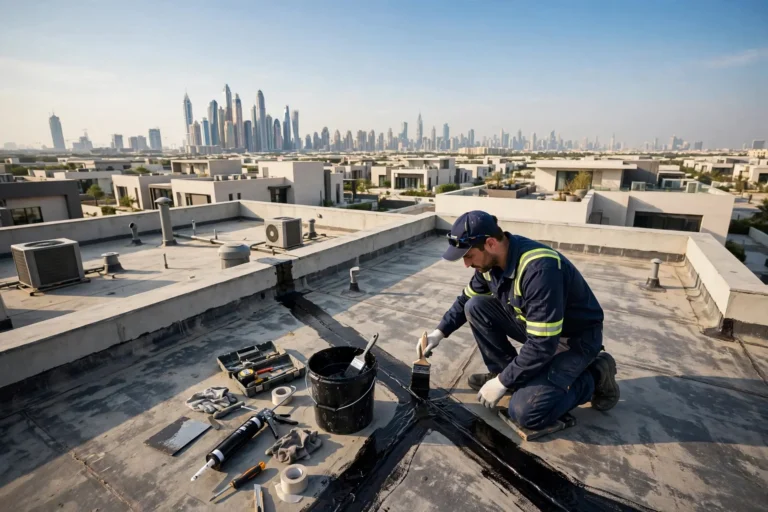
What it is: Rolls of modified bitumen (APP – atactic polypropylene or SBS, styrene-butadiene-styrene) are heat-welded onto the roof surface with a gas torch, forming a thick, continuous waterproof layer, usually finished with a protective screed or reflective coating.
Best for: Flat concrete villa roofs the standard across Arabian Ranches, Mirdif, Al Barsha, and most Emaar/Nakheel communities.
Cost: AED 45–80 per sqm installed.
Lifespan in Dubai: 10–15 years with proper protection; 7–10 years if left exposed to direct sun without a reflective top coat.
Pros: Proven track record in the UAE, thick and puncture-resistant, handles foot traffic well.
Cons: Requires skilled torch application (fire risk if done poorly); seams are the weak point; heavy.
2. Liquid Polyurethane (PU) Waterproofing
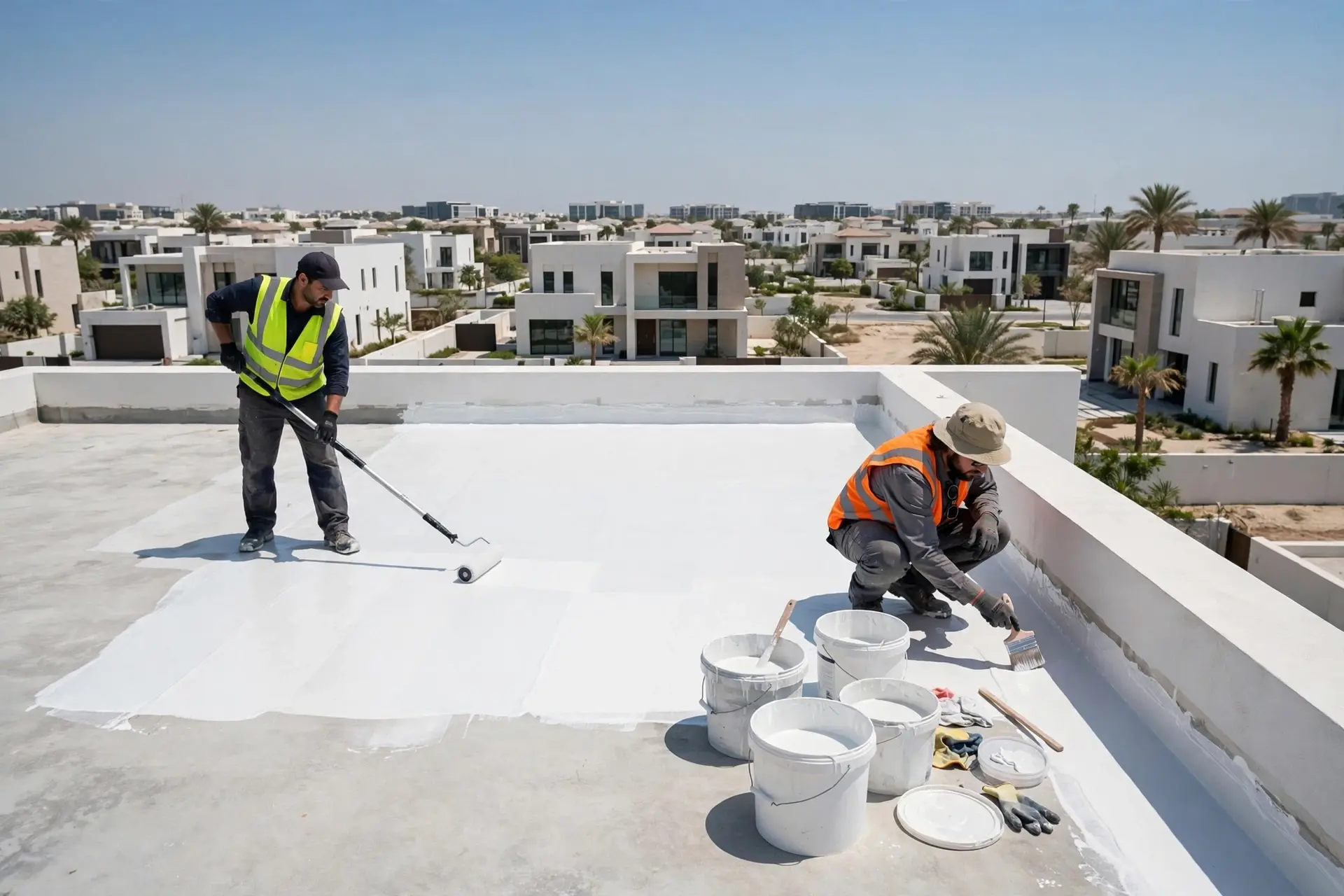
What it is: A liquid-applied membrane brushed, rolled, or sprayed on that cures into a seamless, rubber-like waterproof skin. No joints, no seams, no weak points. Often applied in white for solar reflectivity.
Best for: Roofs with many penetrations (AC units, vents, skylights, pipes) where sheet membranes are hard to seal; premium villas in Jumeirah, Palm Jumeirah, and Emirates Hills.
Cost: AED 70–120 per sqm installed.
Lifespan in Dubai: 12–20 years among the longest of any system when properly applied at the correct thickness.
Pros: Completely seamless; excellent adhesion; bridges small cracks; white versions cut heat gain significantly.
Cons: Premium price; highly dependent on applicator skill and correct thickness (thin spots fail early); can’t be applied in dusty/windy conditions without preparation.
3. Acrylic / Elastomeric Reflective Coatings
What it is: Liquid acrylic coatings applied like thick paint, curing into a flexible, waterproof, highly reflective white layer.
Best for: Budget-conscious waterproofing renewal over existing sound membranes; roofs where reducing heat gain is a priority.
Cost: AED 35–60 per sqm installed.
Lifespan in Dubai: 5–8 years before recoating is needed shorter than other methods, but recoating is cheap and easy.
Pros: Lowest upfront cost; excellent solar reflectivity (noticeably cooler upstairs rooms, lower AC bills); easy to recoat.
Cons: Shortest lifespan; thinner protection; not suitable as a standalone system over badly damaged substrates.
4. Cementitious Waterproofing
What it is: Cement-based waterproof slurries, often polymer-modified, applied to concrete surfaces. Common for terraces, balconies, and wet areas.
Best for: Terrace floors, planter boxes, and concrete roof areas with light foot traffic usually as part of a system, not a standalone exposed roof membrane.
Cost: AED 40–70 per sqm installed.
Lifespan in Dubai: 8–12 years when protected from direct UV (e.g., under tiles or screed); degrades faster if left exposed.
Pros: Excellent bond to concrete; easy application; good for detail work around drains and corners.
Cons: Rigid can crack with structural movement; needs protection from UV; not ideal as an exposed finish.
5. EPDM Rubber Membrane
What it is: Large single-ply synthetic rubber sheets, fully adhered or mechanically fixed. A single sheet can cover huge areas with minimal seams.
Best for: Large flat roofs warehouses, commercial buildings, and big villas where fewer seams mean fewer failure points.
Cost: AED 60–100 per sqm installed.
Lifespan in Dubai: 20–30 years the longest-lasting option, with exceptional UV resistance.
Pros: Outstanding longevity; minimal seams; proven 30+ year performance globally.
Cons: Black EPDM absorbs heat (white-coated versions solve this at extra cost); repairs require compatible materials and skill; higher upfront investment.
6. TPO Single-Ply Membrane
What it is: Thermoplastic polyolefin sheets, heat-welded at seams. Naturally white and reflective.
Best for: Commercial and large residential flat roofs where energy efficiency matters the reflective surface is a genuine asset in Dubai summers.
Cost: AED 65–110 per sqm installed.
Lifespan in Dubai: 15–25 years.
Pros: Reflective white surface reduces cooling loads; heat-welded seams are extremely strong; lightweight.
Cons: Newer in the UAE market (shorter local track record than bitumen); quality varies significantly between manufacturers insist on branded product with warranty.
Waterproofing Methods Compared
| Method | Cost (AED/sqm) | Lifespan in Dubai | Best For |
|---|---|---|---|
| Torch-on bitumen membrane | 45–80 | 10–15 years | Standard villa flat roofs |
| Liquid polyurethane (PU) | 70–120 | 12–20 years | Premium villas, complex roofs |
| Acrylic reflective coating | 35–60 | 5–8 years | Budget renewal, heat reduction |
| Cementitious waterproofing | 40–70 | 8–12 years | Terraces, protected areas |
| EPDM rubber membrane | 60–100 | 20–30 years | Large/commercial flat roofs |
| TPO single-ply membrane | 65–110 | 15–25 years | Energy-efficient commercial roofs |
Full Project Costs: What Villas Actually Pay
Per-sqm rates only tell half the story. Here’s what complete projects typically cost in Dubai:
- Small villa roof waterproofing (150–250 sqm): AED 8,000–15,000 with bitumen membrane; AED 12,000–22,000 with PU.
- Large villa roof (300–500 sqm): AED 15,000–30,000 depending on method and roof complexity.
- Terrace/balcony waterproofing: AED 3,000–8,000.
- Waterproofing + thermal insulation combo: Add 30–50% but this is the gold standard in Dubai, tackling leaks and heat in one project.
Always confirm whether the quote includes surface preparation, primer, protective screed, and warranty the cheapest per-sqm quote often excludes these.
How Long Does Roof Waterproofing Last in Dubai? (Honest Answer)
Manufacturer brochures quote 20–25 years. In Dubai’s reality:
- With zero maintenance: expect roughly 60–70% of the rated lifespan.
- With annual inspection and minor touch-ups: you can meet or exceed rated lifespans.
- Biggest lifespan killers: ponding water (constant immersion destroys everything eventually), unprotected UV exposure, and foot traffic damage from AC technicians walking the roof.
The pattern is consistent: waterproofing doesn’t usually fail everywhere at once it fails at details first (drains, corners, pipe penetrations, parapet junctions). Annual inspection of these detail areas is what extends system life.
Waterproofing + Heat Insulation: Dubai’s Smart Combo
In the UAE, the best roof projects combine waterproofing with thermal insulation. The typical build-up:
- Waterproofing membrane (bitumen or PU)
- Thermal insulation boards (extruded polystyrene)
- Protective screed or tiles
This sandwich keeps water out and dramatically reduces heat transfer into the villa cutting AC costs for the hottest months. If you’re re-waterproofing anyway, adding insulation during the same project costs far less than doing it separately later. Ask your contractor for a combined quote.
How to Choose the Right Method for Your Villa
- Standard villa, tight budget: Torch-on bitumen membrane. Proven, affordable, 10–15 years of protection.
- Premium villa, complex roof: Liquid PU. Seamless, longest practical lifespan, handles every penetration perfectly.
- Need it cheap now, plan to recoat: Acrylic reflective coating. Lowest cost, bonus cooling benefit.
- Large flat roof / commercial: EPDM or TPO. Fewest seams, longest life, best for big areas.
- Terrace or balcony: Cementitious system under tiles.
And whatever you choose: insist on a written warranty (2–10 years depending on system), branded materials (not unlabelled rolls), and a quote that itemises preparation, materials, and finishing separately.
Red Flags When Hiring a Waterproofing Contractor in Dubai
- Quote given without visiting the roof impossible to price accurately sight unseen.
- No mention of surface preparation 80% of waterproofing failures trace to poor prep.
- Unbranded materials if they can’t name the manufacturer, walk away.
- No warranty in writing verbal promises mean nothing when leaks appear.
- Pressure to decide “today only” legitimate contractors don’t need urgency tactics.
- Price dramatically below market corners are being cut somewhere (usually material thickness).
Frequently Asked Questions
Can waterproofing be applied over old waterproofing?
Sometimes. Acrylic coatings can often go over sound existing membranes after proper cleaning and priming. Torch-on bitumen can sometimes be overlaid if the old layer is well-adhered. But if the old system is blistered, delaminated, or trapping moisture underneath, it must be stripped first overlaying a failed system just hides the problem temporarily.
What’s the best waterproofing for a villa terrace in Dubai?
For terraces with foot traffic and outdoor furniture, a liquid PU system or cementitious waterproofing protected by tiles is ideal. The key detail: proper slope to drains (minimum 1:100) matters as much as the waterproofing material itself.
Does waterproofing stop roof leaks immediately?
Yes a correctly installed system is watertight from day one. But “waterproofing” alone doesn’t fix structural issues: cracked screeds, failed slopes, and blocked drainage must be addressed as part of the project, or leaks will find another path.
How do I maintain my roof waterproofing?
Annual inspection (ideally October, before the rains), keep drains and gutters clear of sand and debris, limit unnecessary foot traffic, and recoat reflective coatings when they thin. After any major sandstorm, check for abrasion damage on exposed surfaces.
Is waterproofing covered by home insurance in Dubai?
New waterproofing installation isn’t covered (it’s maintenance). But resulting water damage from a sudden failure sometimes is, depending on your policy though insurers routinely reject claims where maintenance was neglected. Keep inspection records.
How long does a waterproofing project take?
A standard villa roof (200–300 sqm) takes 3–7 days including surface preparation, application, and curing time. PU systems need proper curing between coats, so rushing the schedule compromises quality be suspicious of anyone promising a full villa in one day.
Get Waterproofing Done Right, Once
The most expensive waterproofing is the one you pay for twice. Choose the right method, insist on proper preparation and branded materials, and get it in writing.
Mr. Handyman Dubai installs bitumen membrane, liquid PU, and reflective coating systems across all Dubai villa communities with free inspections, fixed written quotes, and warranty-backed work.
Cost guide: roof repair prices in Dubai → · 7 warning signs your roof needs repair → · Explore roofing services → · WhatsApp: +971567660849